Progress
- Your Details[ Edit ]Result:
- Lunge Test[ Edit ]Left foot: Right foot:
- Foot Pronation Force (supination resistance)[ Edit ]Left foot: Right foot:
- Too Many Toes[ Edit ]Result:
- Fascial Cord Tension[ Edit ]Left foot: Right foot:
- Weight Bearing Arch Height[ Edit ]Left foot: Right foot:
- Non-weight Bearing Arch Height[ Edit ]Left foot: Right foot:
- Modified Jacks Test[ Edit ]Left foot: Right foot:
- Heel Soft Tissue Gradient Test[ Edit ]Left foot: Right foot:
- Hyperextended Knees[ Edit ]Left foot: Right foot:
- Pain Locations[ Edit ]Result:
Non-Weight bearing arch height
7 of 13 [ View / Edit ]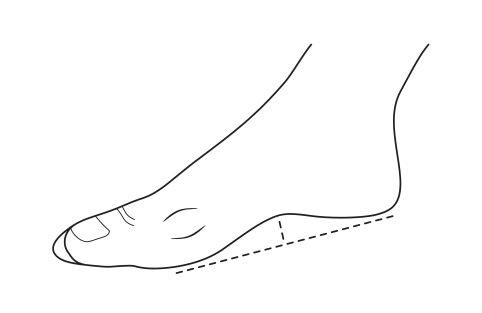
Non-weight bearing
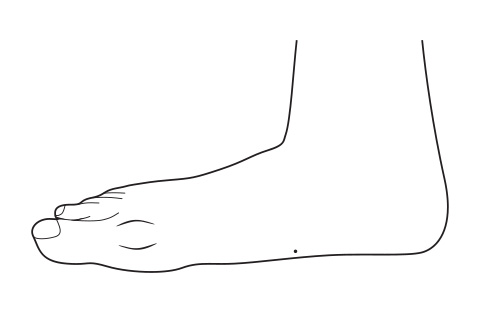
Weight bearing (the dot represents previous arch apex position)
Method
This test is done with the customer sitting with the foot suspended.
- Place index and middle finger on top of the big toe joint to stabilise it. Place the thumb under the tip of the big toe.
- Start bending the big toe upwards (to about 45°) and assess the force required for the fascial cord to become obvious. You can use your other hand to feel the fascial cord pop out.
- Having assessed the force required for the fascial band to become obvious, select Low, Medium or High (for each foot).