Progress
- Your Details[ Edit ]Result:
- Lunge Test[ Edit ]Left foot: Right foot:
- Foot Pronation Force (supination resistance)[ Edit ]Left foot: Right foot:
- Too Many Toes[ Edit ]Result:
- Fascial Cord Tension[ Edit ]Left foot: Right foot:
- Weight Bearing Arch Height[ Edit ]Left foot: Right foot:
- Non-weight Bearing Arch Height[ Edit ]Left foot: Right foot:
- Modified Jacks Test[ Edit ]Left foot: Right foot:
- Heel Soft Tissue Gradient Test[ Edit ]Left foot: Right foot:
- Hyperextended Knees[ Edit ]Left foot: Right foot:
- Pain Locations[ Edit ]Result:
Lunge test
2 of 13 [ View / Edit ]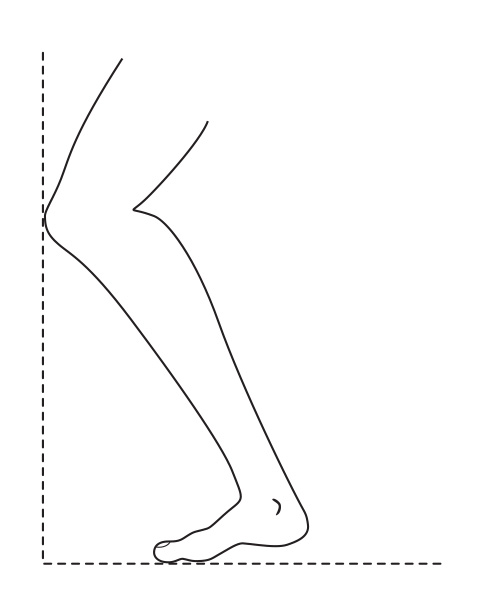
Lunge test fail (heel raised)
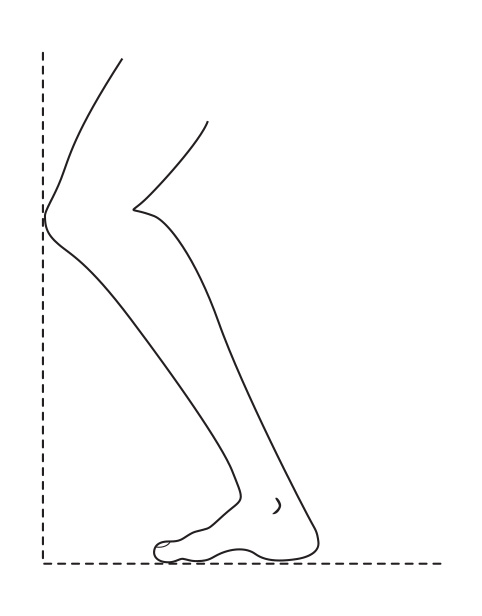
Lunge test pass (heel remains flat)
Method
This test is done with the customer sitting with the foot suspended.
- Ask the customer to stand facing a wall and approximately 10cm away from it. Note: a very tall person may need to stand further away from the wall, and a short person may need to stand closer.
- Ask the customer to move one foot back for balance.
- Ask the customer to bend the knee of the front leg to see how close the knee can come to the wall. The angle between the lower leg and the wall should be approximately 35°.
- If the knee can touch the wall with the heel still on the ground, select a pass for this test
- If the heel lifts off, Select a fail for this test.
- Select pass or fail for each leg.